



The History of Life Insurance & Modern Perspectives
Free Life Insurance Comparison
Compare Quotes From Top Companies and Save
Kristen Gryglik
Licensed Insurance Agent
Kristen is a licensed insurance agent working in the greater Boston area. She has over 20 years of experience counseling individuals and businesses on which insurance policies best fit their needs and budgets. She knows everyone has their own unique needs and circumstances, and she is passionate about counseling others on which policy is right for them. Licensed in Massachusetts, New Hampshire,...
Licensed Insurance Agent
UPDATED: Dec 4, 2023
It’s all about you. We want to help you make the right coverage choices.
Advertiser Disclosure: We strive to help you make confident insurance decisions. Comparison shopping should be easy. We are not affiliated with any one insurance provider and cannot guarantee quotes from any single provider.
Our insurance industry partnerships don’t influence our content. Our opinions are our own. To compare quotes from many different insurance companies please enter your ZIP code on this page to use the free quote tool. The more quotes you compare, the more chances to save.
Editorial Guidelines: We are a free online resource for anyone interested in learning more about insurance. Our goal is to be an objective, third-party resource for everything insurance related. We update our site regularly, and all content is reviewed by insurance experts.
UPDATED: Dec 4, 2023
It’s all about you. We want to help you make the right coverage choices.
Advertiser Disclosure: We strive to help you make confident insurance decisions. Comparison shopping should be easy. We are not affiliated with any one insurance provider and cannot guarantee quotes from any single provider.
Our insurance industry partnerships don’t influence our content. Our opinions are our own. To compare quotes from many different insurance companies please enter your ZIP code on this page to use the free quote tool. The more quotes you compare, the more chances to save.
On This Page
The history of life insurance is really quite fascinating!
While life insurance wasn’t a mainstream financial product in the United States until the mid-1800s, the concept of life insurance has been proven to have begun as early as 100 B.C., when soldiers of the Roman Empire formed burial clubs to pay for funeral expenses of fellow soldiers.
Quick Guide
- Roman Burial Clubs
- Edward Lloyd’s Coffee House
- Moral Duty for Husbands to Provide for Families After Death
- The Titanic & WWI
- Falling Sales of Life Insurance
- Modern Perspectives – Life Insurance & Hollywood
- Life Insurance Agents Get a Bum Rap
- Where to Buy Life Insurance Today
Enter your ZIP code below to view companies that have cheap insurance rates.
I. Roman Burial Clubs
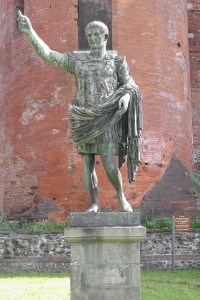
The purpose of these clubs was to pool the resources of the members, so when a soldier died unexpectedly, he would receive a proper burial. While the Romans were advanced in many ways, the purpose of a proper burial was different than you may think.
Ancient Romans believed that if a proper burial was not given, unhappy ghosts would be unleashed. The Romans believed this so fervently, that the need arose for burial clubs to assist the poor who couldn’t afford proper burial.
When a member of the club died, the pooled resources made it possible for even the poor to afford burial expenses. This concept closely mirrors the idea of premiums.
By approximately 450 A.D., these clubs evolved and began to even provide a bit of a stipend for the deceased’s family, which obviously mirrors the modern day death benefit. When the Roman Empire fell, the burial clubs fell with it.
II. Edward Lloyd’s Coffee House
Insurance later became largely popularized in Europe in the 1600s when European civilizations became more dependent on shipping for trade. Shipowners and merchants would form guilds to protect each other’s interests in the event of shipwrecks, fire or pirating.
Marine insurance became an industry in the late 1600s, with the most structurally organized outfit being Edward Lloyd’s Coffee House located on Tower Street in London. Many researchers credit Lloyd’s as the place where the modern concept of insurance came into being.
The first insurance company in the United States was formed in Charleston, South Carolina, in 1735. Life insurance wasn’t added until 1760.
RELATED: 5 Critical Tips You Must Know Before Buying Life Insurance
In the early years that life insurance was offered in the U.S., it was not nearly as popular as flood and fire insurance and was even preached against as wicked by religious leaders. Their argument was that purchasing life insurance was akin to gambling and betting against God.
III. Moral Duty for Husbands to Provide for Families After Death
By the mid-1800s, life insurers began appealing to the moral duty of husbands to provide for their families in the event of premature death.
It was then that the life insurance industry experienced a real boom. Some of the companies formed during that time period are still around today, such as New York Life (1845), Mass Mutual (1851), Guardian Life (1860) and Met Life (1864).
Enter your ZIP code below to view companies that have cheap insurance rates.
IV. The Titanic & WWI
In 1912, when the Titanic sank, Northwestern Mutual paid out $500,000 in death benefits to 13 different policy owners. Life insurance sales rose dramatically following World War I.
By 1920, there were more than 120 million life insurance policies owned in the U.S. and by 1930 in force life insurance had reached an all-time high of $117 billion.
At the time, that equaled approximately one policy for every adult person in the U.S. One in five was insured by MetLife.
V. Falling Sales of Life Insurance
Sales have fallen steadily since and LIMRA estimated in 2010, that only 44% of U.S. households have individual life insurance coverage. This is a 50 year low, but life insurance has remained an important centerpiece of a family’s financial planning.
For example, on 9/11, when 2,976 people perished in the attacks in NY, Washington D.C. and Pennsylvania, it is estimated that over $1.2 billion was paid out in life insurance death benefits.
Northwestern Mutual reports they paid benefits of about $125 million to the beneficiaries of the 157 policy owners who lost their lives.
Many studies attribute the decrease in life insurance sales in the U.S. to the neglect of the middle class.
Life insurance agents target an affluent, senior market looking for big sales and neglect the average Joe and Jane who need life insurance coverage to protect their families in the event of unexpected death.
Rest assured if you’re an average Joe or Jane, we will help you acquire affordable coverage with every bit of service and dedication given to our affluent clientele.
VI. Modern Perspectives – Life Insurance & Hollywood
Over the years, Hollywood has woven life insurance into movie plots on numerous occasions, almost unanimously depicting the insurance industry and agents negatively.
Insurance fraud schemes, murder plots to collect insurance proceeds and evil corporations denying benefits to policyholders are just a few common uses of insurance in movie plots.
Movie Assumption #1 – The Insurance Industry is Unethical.
It is almost an unwritten assumption in movies that everything and everyone connected to insurance is immoral, or even evil. Insurance companies or their agents almost always play the antagonist role. Consider the following movies:
The Rainmaker (1997) – When the parents of a 22-year-old boy dying of leukemia file a claim with an insurance carrier called “Great Benefit”, the company denies the claim and in doing so, denies the boy the bone marrow transplant needed.
Damon’s character helps the family bring suit against Great Benefit. The company does but budge on their denial and the boy dies mid-trial.
Viewers get the sense that this doesn’t just happen at Great Benefit, but across the insurance industry.
RELATED: Check Sample Life Insurance Rates by Age (No Personal Info Required)
In reality, denial of claims is a big problem with medical insurance policies.
According to EmaxHealth, From 2002 through June 30, 2009, the five largest insurers operating in California rejected 31.2 million claims for care or a staggering 21 percent of all claims.
Insurance representatives, however, will assert that most of these denials are due to claim forms being filled out inaccurately and eventually, most of these claims do get paid.
A Little Trip to Heaven (2005) – Forest Whitaker plays an insurance adjuster who discovers what may possibly be a couple engaged in identity theft, murder, and life insurance scams. His job is to uncover any fraudulent activity to protect the company’s investment.
In at least three separate scenes, he is shown in his office negotiating a payout with the beneficiaries. On all three occasions, he is able to provide evidence of why their claim is not valid and offers them a substantially lower payout.
The problem I have with this movie is that it makes it look like the insurance carrier is out to rip everyone off, and will do everything they can to deny a claim. The truth is that life insurers paid out more than $56 billion in death benefits in 2007, according to LIMRA, which was more than 98% of all death claims.
In truth, insurance fraud is prevalent even in the life insurance industry, but life insurance carriers investigate very few claims as portrayed in “A Little Trip to Heaven.”
If the policy was issued less than two years from the date of the insured’s death, your typical claims representative will collect the death certificate, make sure it matches the social security number of the deceased insured and will perform a “next of kin” phone interview.
They will also collect medical records to be sure the insured did not falsify any information on the application.
Additionally, if the death certificate identifies the cause of death as accidental or due to homicide, the claims rep will call the police to confirm the accidental death, or in the case of homicide, that the beneficiary is not a suspect.
At this point, if everything looks good, the benefit is paid out. If something isn’t adding up, they may send out a character like Forest Whitaker’s for further investigation.
The movie makes it appear as though every insurance company does this on every claim. After the policy has been in force for more than two years, the insurance carrier has to pay out the full amount, even if there is a suicide.
The Apartment (1960) – This Oscar-winning film is a classic portrait of the corporate world, and the insurance industry in particular, acting immorally.
It shows an insurance clerk trying to get ahead in a company with 30,000 employees. How do you do that?
Simple, lend out your apartment to the top dogs so they have a secret place to bring their mistresses.
The Incredibles (2004) – Even Mr. Incredible (commonly known as Bob Parr) works for an insurance company, Insuricare, whose boss discourages him from paying on claims.
After giving in to one benefits claimant, his boss, Mr. Huph, pulls him aside and says, “Parr! You authorized payment on the Walker policy? … I don’t wanna know about their coverage, Bob!
Don’t tell me about their coverage. Tell me how you’re keeping Insuricare in the black!” In the real world, claims departments of insurance companies don’t treat every claim with a rubber-stamp rejection, not even health insurance companies.
Movie Assumption #2 – Insurance Agents are Boring, Rude, and Unhappy.
Groundhog Day (1993) – This Bill Murray classic features one of the funniest characters of all time, Ned (Needle-Nose) Ryerson, who hounds Bill Murray’s character to buy life insurance.
Ned is a life and property/casualty agent who plays the stereotypical annoying insurance agent. This is the guy who talks about insurance with people he just meets at parties, football games, church, and funerals.
Ned’s pestering knows no social boundaries. Click here for YouTube video of Ned Ryerson – Annoying Life Insurance Agent from Groundhog Day.
In reality, I meet very few agents like Ned. Agents like him come from large insurance companies who train their employees to take advantage of social situations.
They are taught to be marketing themselves all the time. It’s probably because of this stereotype that a lot of agents these days try to be polar opposite of Ned, taking an educational approach to sales, rather than using pushy sales pitches.
That being said, there are definitely a lot of insurance agents out there that rub people the wrong way. I was recently told by a client that I was the first insurance agent he ever met that he liked. My client is 56.
The Truman Show (1998) – Jim Carey’s character finds out that his whole existence is a sham created for a television show.
Everything in his world is deceivingly perfect, including his wife, friends, house and, of course, his job as an insurance clerk.
Fight Club (1999) – The main character (Edward Norton) is an insurance professional who is sick of his dead-end, white-collar corporate career, which prompts him to join a club where friends get together to beat the daylights out of each other.
And Finally – A Few Favorite Flicks Containing Life Insurance in the Plot
Double Indemnity (1944) – This is a Billy Wilder classic film, based on a woman who persuades her boyfriend to kill her husband, after having him take out a big life insurance policy.
The death needed to look accidental, so the policy would pay out double the death benefit, since it had a double indemnity clause.
Since her boyfriend is an insurance agent for Pacific-All-Risk, he should know how to dupe the system, but investigator, Barton Keyes, eventually catches on.
The problem with this plot is that, once again, it’s not usually an insurance investigator who solves a crime in real life. It’s the police.
If this case happened, the wife and husband would have gotten the money, since the autopsy and police investigation both pointed to an accidental death.
At this point, the insurance company pays the benefit; it doesn’t send out an investigator.
Alias Jesse James (1959) – This is a Bob Hope western comedy where Hope’s character, a life insurance agent, sells a $100,000 policy to outlaw Jesse James, who writes T.J. James on his application.
Jesse James describes himself as “well known in the banking and railroad industries”.
When Hope’s boss finds out, he is charged in finding Jesse James to return the policy to him, and help protect James before anything happens to him.
I love this movie, but this would never happen. All life insurance applications ask about your occupation. If you said you’re a train and bank robber, the company wouldn’t issue a policy.
But if you lie and die within two years of the policy, like in a gunfight, the insurance company would be off the hook since a material misrepresentation was made on the application.
In addition, the policy could be rescinded without having to return the policy to Mr. James.
The Big White (2005) – This movie is about an insurance fraud scheme conjured up by travel agent, Paul Barnell.
When he finds a dead body in the snow of the Alaskan mountains, he tries to play it off as though it is the body of his missing brother and collects the proceeds of his $1 Million life insurance policy.
This is another case of where the one committing fraud almost gets away with it, since he fools everyone, but then the insurance claims adjuster comes in and figures it out.
Enter your ZIP code below to view companies that have cheap insurance rates.
VII. Life Insurance Agents Get a Bum Rap
Generally speaking, I think insurance gets a bum rap in Hollywood and in general. While some agents may be a bit rude or pushy…and some health insurance carriers deny too many claims, the insurance industry is an integral part of our lives.
In most cases, companies deliver what they promise. I’ve personally known families who lost their homes in the San Diego wildfire in 2003, who have long since been living in newly rebuilt homes, paid for with proceeds from property insurance companies.
I also know several life insurance clients who have come to me after a friend or relative died to tell me how they saw the life insurance proceeds help the grieving family.
Moving forward, I’d like to see Hollywood stop demonizing the insurance industry. I think it’s irresponsible, not to mention bad for my business!
VIII. Where to Buy Life Insurance Today
We cannot stress enough the importance of life insurance in your life and we can help you choose the right product at the most affordable price possible.
Independent agents have access to multiple companies.
We know which insurers offer the best rates when it comes to obtaining life insurance.
Enter your ZIP code below to view companies that have cheap insurance rates.
Kristen Gryglik
Licensed Insurance Agent
Kristen is a licensed insurance agent working in the greater Boston area. She has over 20 years of experience counseling individuals and businesses on which insurance policies best fit their needs and budgets. She knows everyone has their own unique needs and circumstances, and she is passionate about counseling others on which policy is right for them. Licensed in Massachusetts, New Hampshire,...
Licensed Insurance Agent
Editorial Guidelines: We are a free online resource for anyone interested in learning more about insurance. Our goal is to be an objective, third-party resource for everything insurance related. We update our site regularly, and all content is reviewed by insurance experts.